Yellow-Legged Hornet
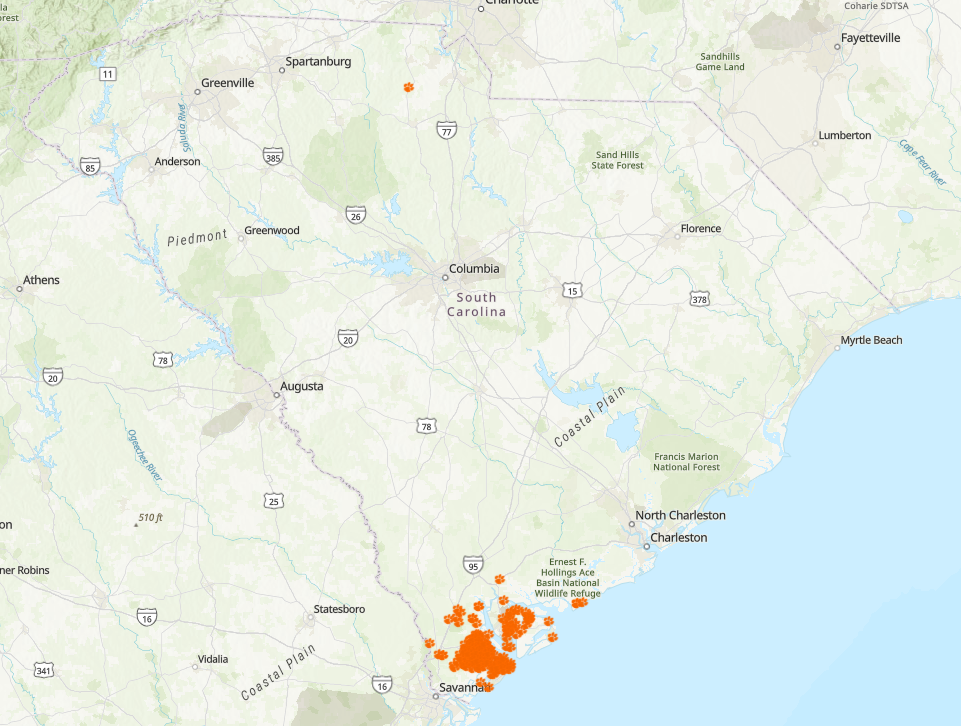
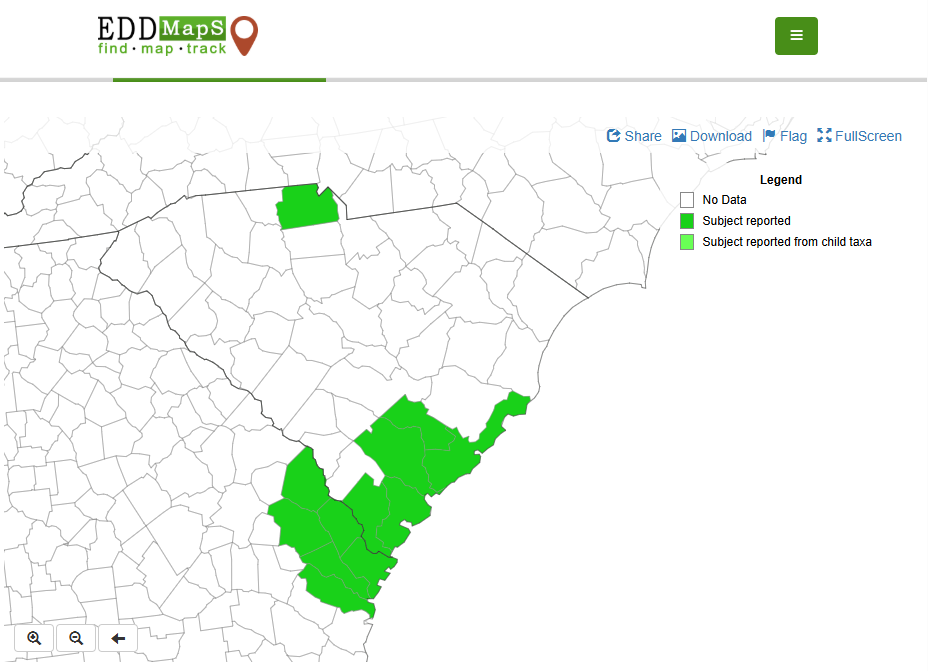
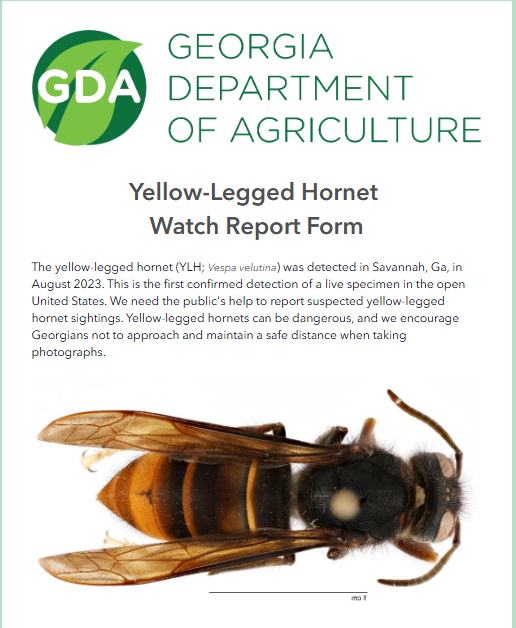
Native to Southeast Asia, Yellow-Legged Hornet (Vespa velutina; YLH), also referred to as the Asian Hornet outside of the United States, have been spreading for several years. Europe confirmed YLH in 2004 and the United Kingdom did the same in 2016. In 2025, New Zealand also confirmed presence of this pest, just to name a few. Yellow-Legged Hornet was confirmed in the United States, in Savanah, Georgia, in August of 2023. This was followed by trapping within Georgia and surrounding states. Then, in November of 2023, South Carolina had its first detection in a trap designed for that purpose and by Spring of 2023 they had found and destroyed an embryo nest along with several queens. Both states have been working to combat this pest ever since.
In July 2026 the first detection in North Carolina was discovered near the South Carolina border.
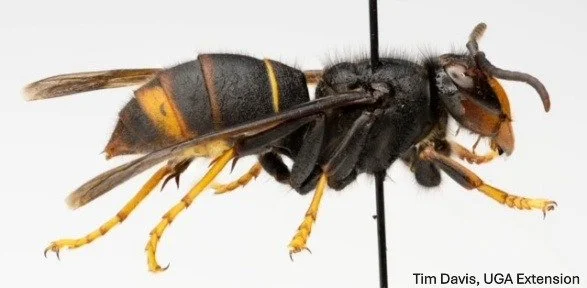
As the colony reaches the point of making its primary nest, these hornets can begin preying on bee hives in their area, as well as other sources of protein and carbohydrates. The adult hornets feed on carbohydrates and the brood needs protein. A honey bee colony can provide both, making it a great resource for the Yellow-Legged Hornet. However, these hornets are generalist feeders and will prey on native bees and other beneficial insects. The hornet will exhibit a “hawking” behavior where she hovers near the entrance of the hive and will grab bees that are flying to and from the colony or pick them off from the landing board of the bee hive. She will do this behavior for about 20 minutes at any given time, taking the thorax of the bees that she catches back to the colony to feed their brood. When there are few hornets, this hawking will not cause major problems for the bee hive, but as the hornet number grows it will be a major deterrent to the colony of bees, forcing them to stay within the colony for survival. The hornets will do this all day long for months, paralyzing the honey bee colonies from foraging behaviors necessary for survival. This paralysis of the colony can result in the colony starving to death.
Life Cycle
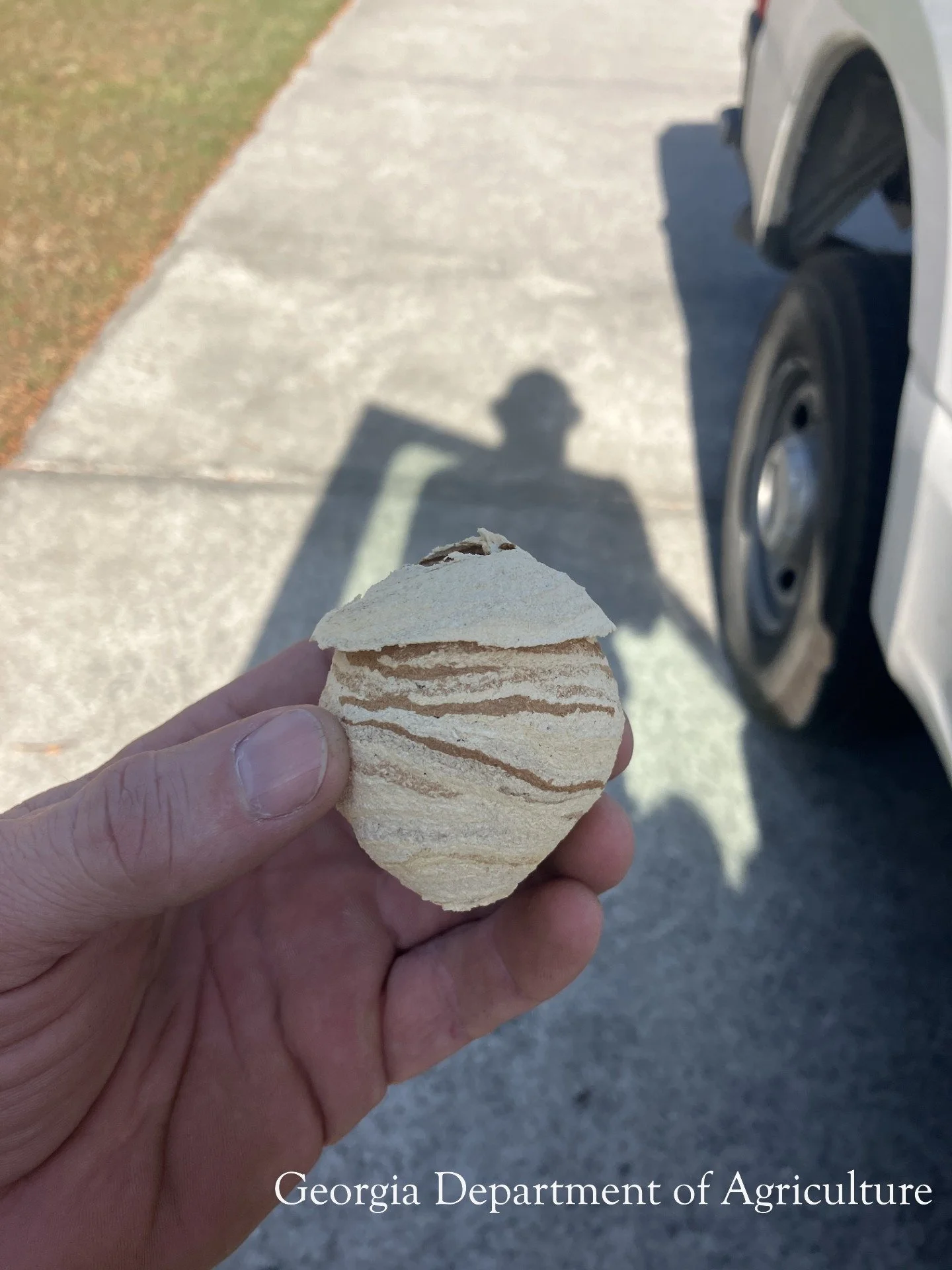
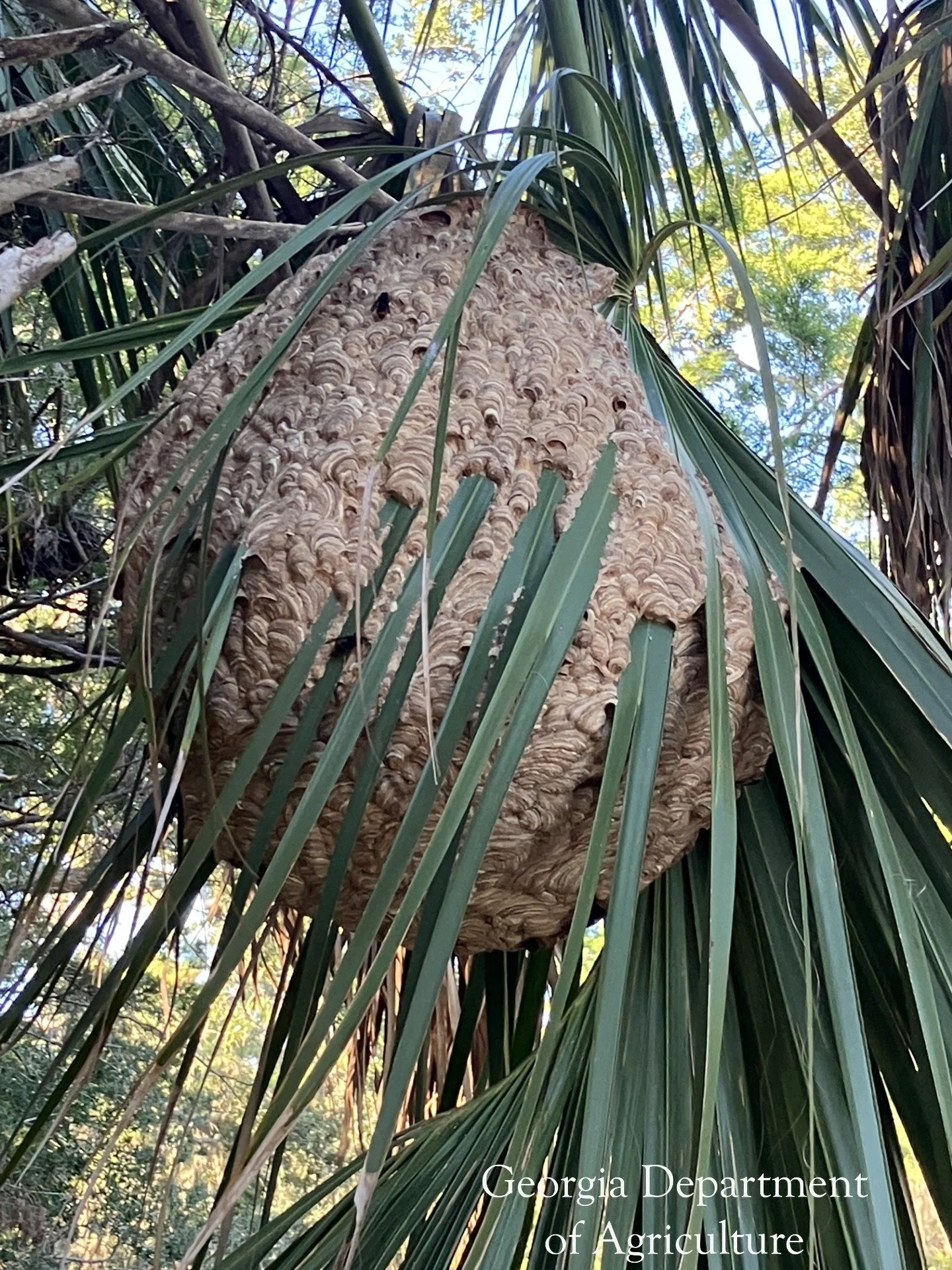
Yellow-Legged Hornets have a lifecycle similar to that of other wasp or hornet species. Mated female queens will over-winter in secluded spaces such as trees or leaf litter, among other things. In the Spring, the young, mated female will emerge and begin by building a small nest, made of macerated wood pulp. This is the embryo nest. This nest can be located nearly anywhere it will fit such as in man-made structures or in low bushes aboveground. Once the nest is ready, she will begin laying eggs and taking care of the brood that is generated to be her worker daughters. She will forage and feed her young until the first group of workers emerge as adults and then they will take over the brood-care jobs, leaving the queen to focus on egg laying. As the colony begins to grow, they will build a new nest, the primary nest, which can be anywhere from softball to watermelon sized. Later, as the colony continues to grow, they will build a secondary nest, usually high in a tree or on tall rock walls. These secondary nests often resemble that of other types of hornets. This secondary nest is an “egg-shaped paper basket” and may hold 6,000 worker hornets, on average. By the end of the summer months the hornets switch gears and begin to focus on producing queens and males for the coming winter. This is the point at which the population reaches its peak with many workers helping to produce the reproductive males and females/queens. By fall the colony begins its decline and by winter the only members of the colony that are alive are the newly mated queens, which overwinter and begin the cycle again during the following spring months. These mated females can travel 30+ miles to develop their embryo nest.
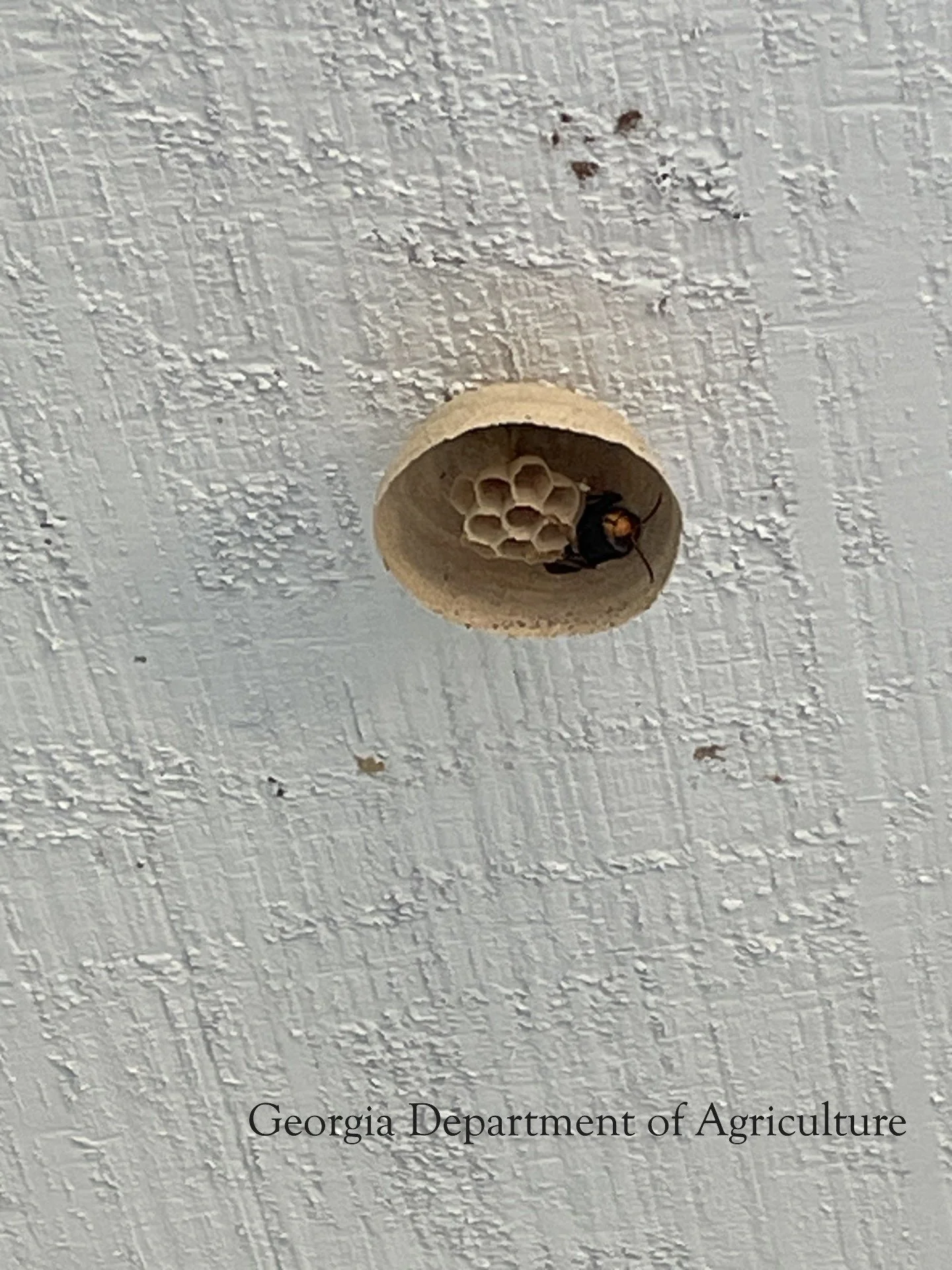
Embryo Nests
Current Activities
When Yellow‑Legged Hornet (YLH) was first detected in Georgia, the state launched an intensive trapping and eradication program. Traps were strategically placed to help pinpoint nest locations, and any nest that was found was eradicated as quickly as possible. As the hornet’s range expanded, Georgia continued trapping efforts and began relying more heavily on public reports, while still eliminating every nest located.
South Carolina had already been deploying exotic wasp traps for several years before YLH was discovered in Georgia, without detecting any target species. Once Georgia confirmed YLH near the South Carolina border, South Carolina increased trap density in the surrounding region. After the first YLH was confirmed in the state, they further expanded trapping operations and also eradicated each nest identified.
Because Georgia was the first state to encounter this pest, they faced considerable troubleshooting and experimentation in determining the most effective trapping methods, trap designs, and baits, as well as strategies for locating nests. Traps ranged from simple recycled gallon vinegar jugs to more complex bucket-style traps. Through extensive testing, Georgia identified a bait mixture nicknamed “Georgia Juice” as the most effective attractant for capturing worker hornets. These traps were monitored to determine whether a nest might be nearby.
Later in the season, when the hornets begin seeking higher‑protein food sources such as honey bees or native bees, Georgia found that traps baited with dead fish or rotting meat are especially effective. These protein‑based traps not only attract hornets but also allow observers to track individuals back to their nests. Tracking wasps in this manner with binoculars and multiple scouts has aided in the eradication of many nests.
Georgia Juice Recipe
2 cups purple grape juice
2 cups dark brown sugar
water
Directions
Add the grape juice to the trap container. measure out approximately 2 cups of dark brown sugar, loosely into a container and begin adding water to make a water/brown sugar mixture of about 2 cups. Stir until the sugar is dissolved. Add the brown sugar to the trap and mix. Your trap is now ready to hang outside.
Watch a video on how to hang and bait a trap.
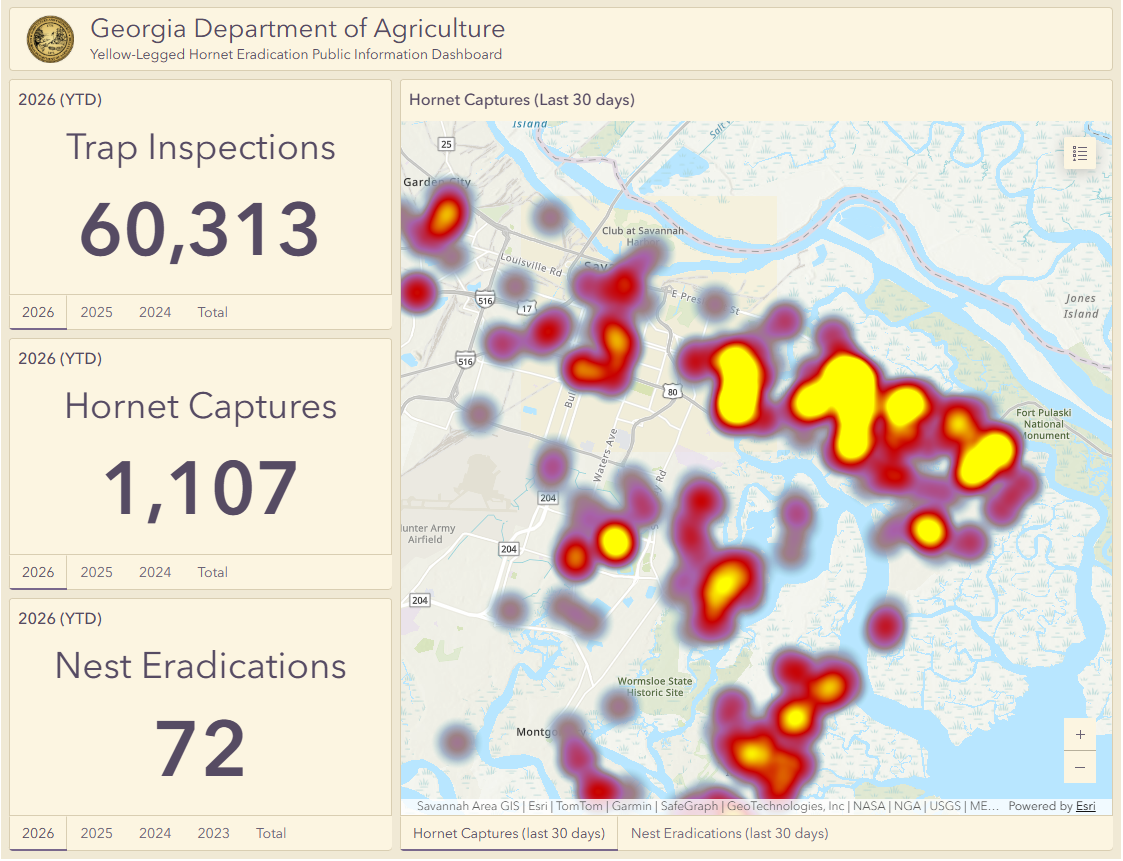
Where to Report a Suspected Yellow-Legged Hornet
All other states, please reach out to your State Apiary Inspector or State Plant Regulatory Office.
Secondary Nest
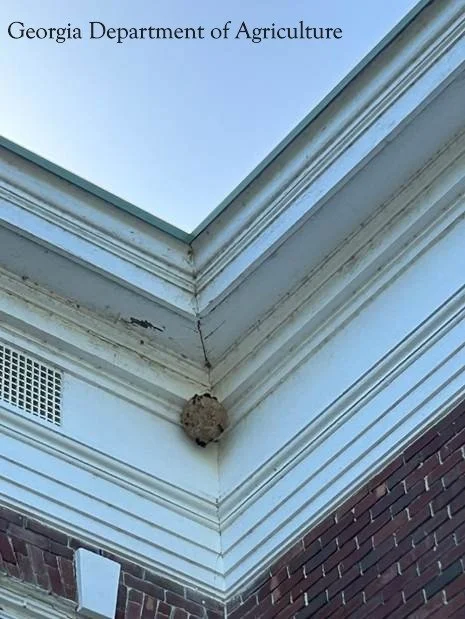
Primary Nest
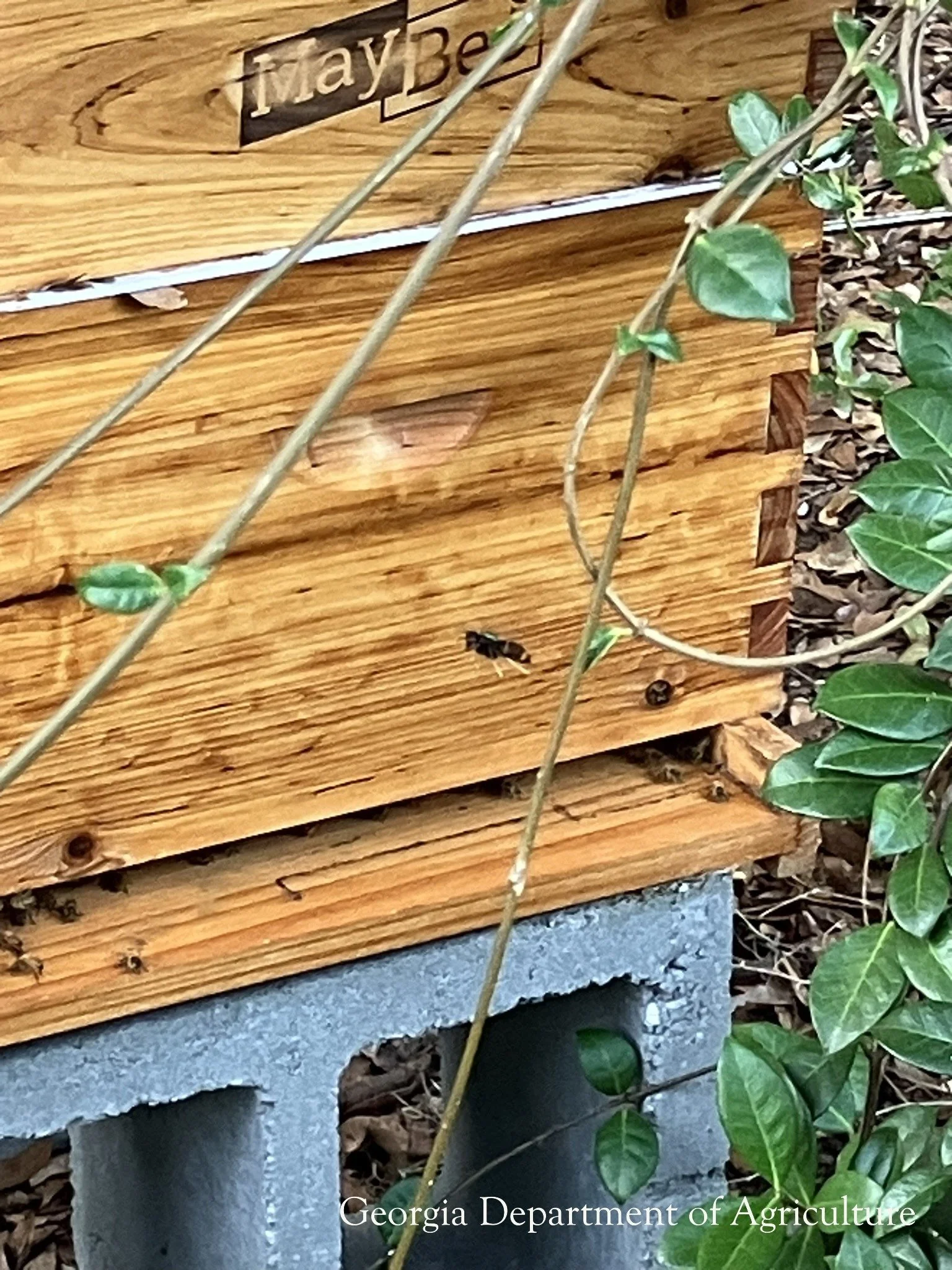
Yellow-Legged Hornet “Hawking”
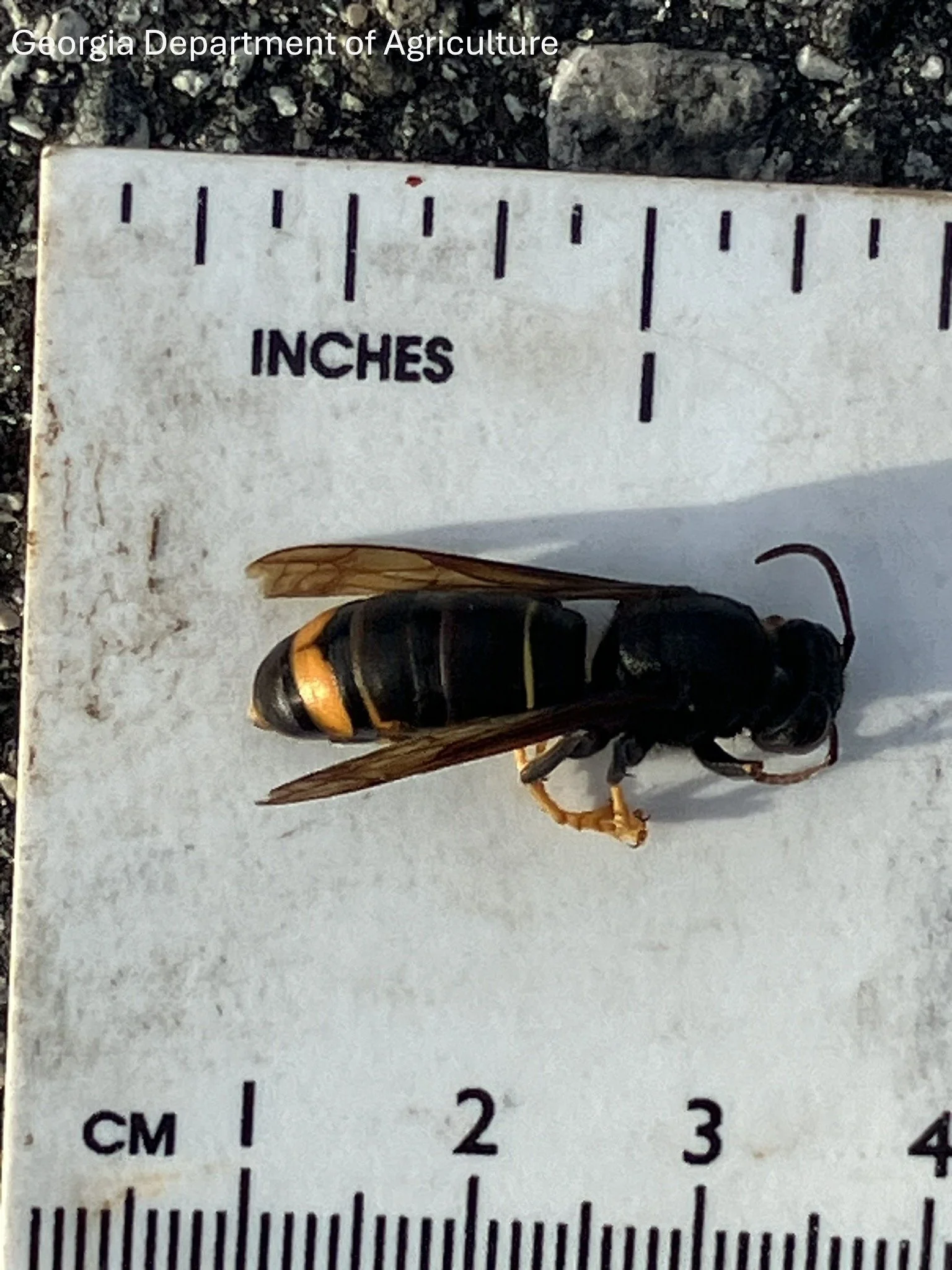
Worker Yellow-Legged Hornet
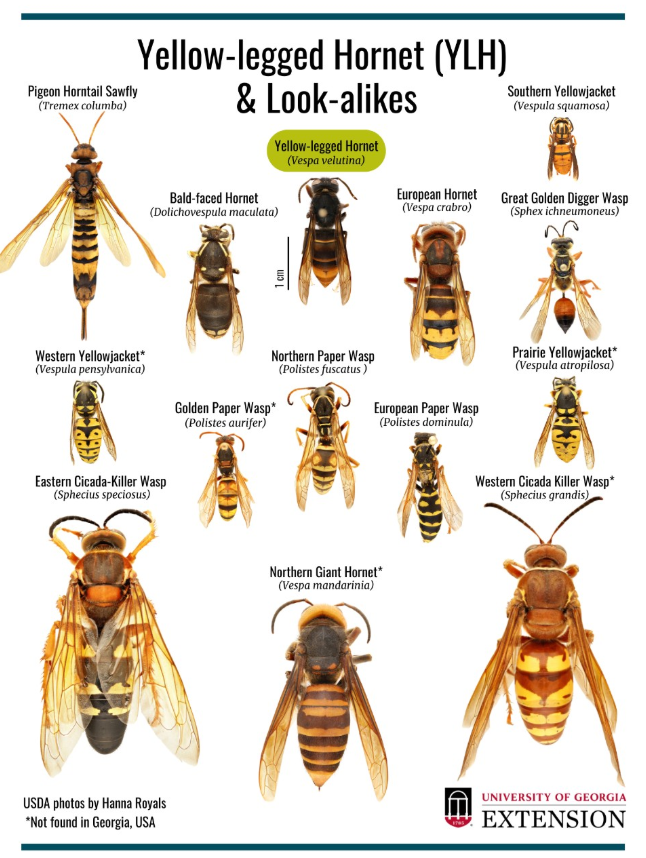
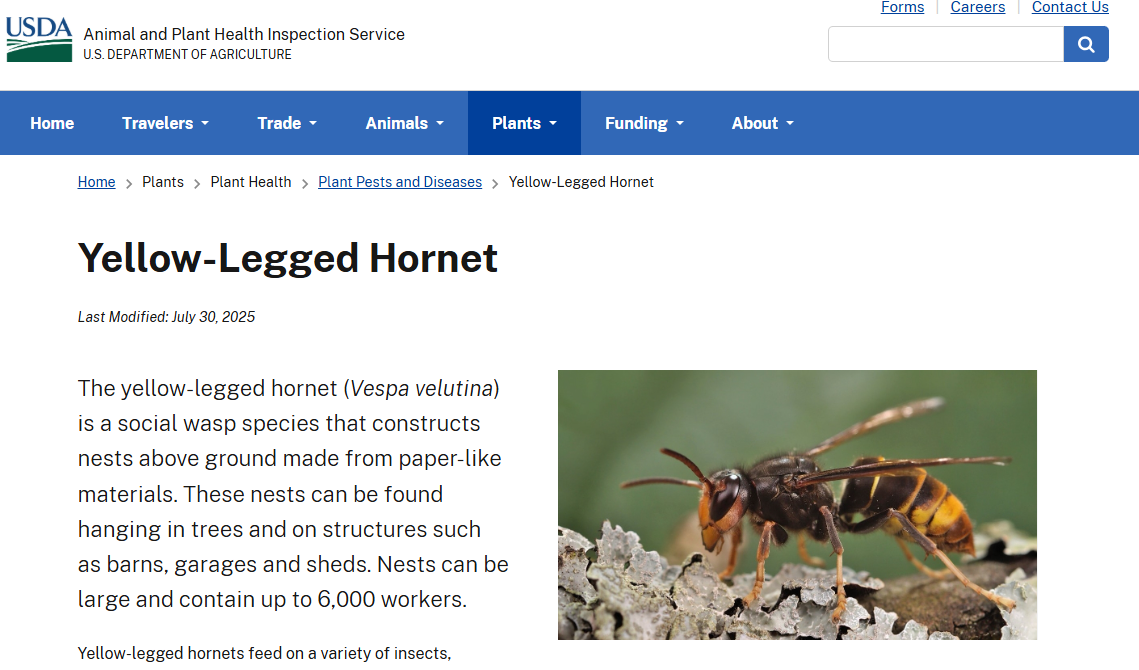
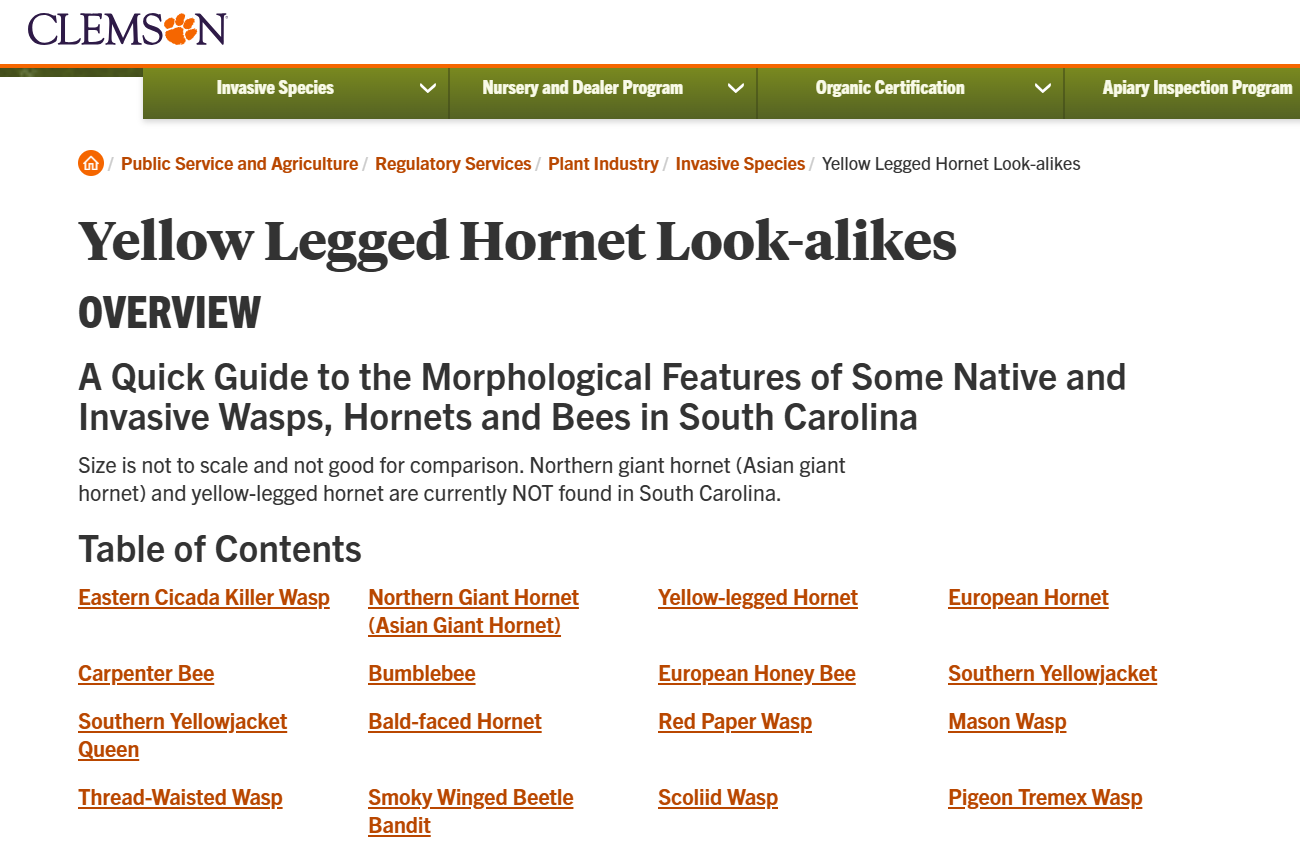
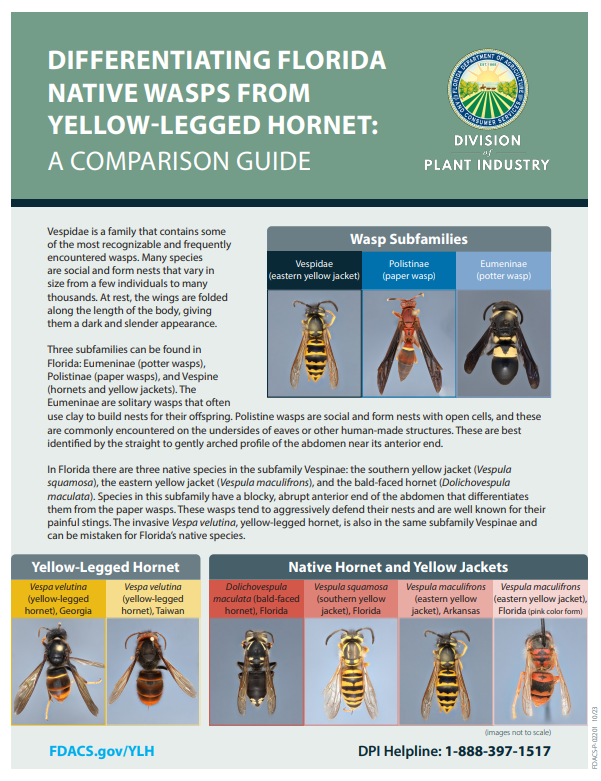
ID Guides/Look a likes
Resources
Yellow-Legged Hornet- Pennsylvania State University
Yellow-Legged Hornet- Georgia Department of Agriculture
Yellow-Legged Hornet- USDA
Invasive Species Spotlight- Yellow-Legged Hornet- Clemson
Yellow-Legged Hornet- University of Georgia
Yellow-Legged Hornet- Florida Department of Agriculture and Consumer Services
Yellow-Legged Hornet- North Central IPM Center
Plant Industry- Yellow-Legged Hornet- North Carolina Department of Agriculture and Consumer Services
Yellow-Legged Hornet on Secondary Nest